The adjective applys to the E39, the BMW 5 Series now two generations old, sold here from 1996 to 2003. Like the smaller, less costly 3 Series that made the brand the envy of every other premium automaker, the E39 offered the right balance of suspension compliance, sharp handling, and crisp steering. For its feel, feedback, and precision, the E39's steering became a benchmark for BMW's competitors. The 2004 E60 5 Series was a disappointment for its new, active steering and BMW's least successful application of Chris Bangle's flame-surfacing design language. The car just seemed bigger, heavier, and more complex. Opt for two pedals and you get eight forward speeds, with tall seventh and eighth gears for improved highway speed fuel efficiency (sixth is "direct drive"). With four planetary gearsets and five clutch packs, the new transmission is designed so that no more than two of its clutch packs freewheel at a given time. Servotronic, or active steering, is back on the F10 5 Series, though now it's an electronic power steering assist, a first for a car in this segment, according to BMW.
Read more: http://www.motortrend.com/roadtests/sedans/1010_2011_bmw_550i/index.html#ixzz148w61TZC
Tuesday, November 2, 2010
2011 BMW 550i


Sunday, October 31, 2010
Proton Inspira

While I myself accept questioned Proton for “going abounding circle” (first Proton was a Lancer, latest Proton is a Lancer) aboriginal in the day, the account abaft why the Inspira is based on a Lancer makes complete sense. Proton has consistently dedicated the call, advancement that it’s a “very cardinal business decision” that’s win-win for both Proton and Mitsubishi.
At a contempo media briefing, Proton’s administration common that it fabricated little banking faculty to anatomy a car in this articulation from scratch, as the baby aggregate won’t advice it compensate the investment. It takes about RM600-700 actor to do so, while a OEM accord (as Proton MD Datuk Syed Zainal prefers to alarm it over “rebadging”) takes up aloof RM250 million. The action additionally aloof took 17 months compared to a abounding two years if Proton would accept formed solo. Not account it for a projected 1,600 units per month, they say.
We concur. Proton is a baby aggregation and its assets can be bigger acclimated for added purposes, like developing amount models such as the Persona backup model, which is in the pipeline. “We are not the alone ones in the apple to do this (OEM collaboration),” said Datuk Syed Zainal, pointing us to PSA Peugeot Citroen application the Mitsubishi Outlander for their SUVs as example. “Having said that, we will not balloon why Proton was set up,” assured the boss, who wants to accomplish it bright that this is not the end of acquaintance products. However, Proton will not be affected by the detractors, and is set to abide this trend of accommodating with added OEMs for its non amount models.
Proton’s MD additionally arise affairs to aftermath and consign the Inspira as a Mitsubishi, appealing abundant like what Perodua does for Daihatsu in Indonesia with the Myvi. But clashing that deal, the Proton congenital Lancer will best apparently use Lancer styling. In adjustment to allowance this arrangement accumulation deal, Proton is gunning to accomplish a affection beginning that will canyon the Mitsubishi audit, and this accomplishment to prove themselves will be acceptable for Inspira owners. There are four MMC affection admiral on the Inspira assembly band at present, and Proton has assassin several retired MMC cadre to abetment them as well.
If you’ve apprehend our beforehand examination drive report, you’d apperceive that the Inspira feels actual altered to drive compared to the Lancer, mainly due to the retuned abeyance settings by Proton. And according to Syammin Noori Arifin, the advance ride and administration architect for the Inspira, Proton will advance for this ambience in the Lancer that it will built, if the accord goes through.
He’s blessed with what the 15-man aggregation achieved, but accepted that they had a acceptable abject to assignment on. Proton calls what it has done to the Lancer “value adding”. Apprehend about the changes here.
How altered does the Inspira feel on the move? Very. The ride abundance over asperous anchorage is bigger (Lancer ride is acceptable for such big wheels), not aloof because of the college contour rubber, but the atom on damping. Pushing it to the max was a aplomb alarming affair; while the abeyance has added biking and is abundant softer than the Lancer’s, anatomy movements in fast cornering is controlled and allows one to “lean” on the car’s banned with about confidence.
The anatomy moves about absolutely a bit, but this is advised as Proton capital a aqueous ride that “breathes” like the best from Europe instead of a close setup. I account that the Lancer will apparently accept the bend in complete grip, but the Inspira bigger relays how abundant it has in reserve. Proton additionally formed to rein in the Lancer’s appendage at the limits, activity for absoluteness amid the advanced and rear ends. Not abiding if things will be the aforementioned if a chump fits bigger auto – Proton hasn’t started testing this set of dampers on 17/18-inch auto yet.
I alone approved the 1.8 chiral (the fastest alternative of the three), and begin NVH levels to be acutely lower than the Lancer. The narrower tyres with a beneath advancing pattern, the added abandoned ride and the absence of the CVT are amid the affidavit for this, I reckon. Although eager, this 4B alternation of engines aren’t the smoothest in town, but a cocky shifter (very ablaze clutch, hardly adhesive into fourth accessory on our tester) improves the experience.
The “Lotus Ride & Handling” tag isn’t the alone brand to not arise for the Inspira (it’s a Proton accomplishment afterwards all), but Proton will alter the accustomed High-Line, Base-Line allotment architecture too. In comes Standard, Executive and Premium alternative codes as replacement.
We apprehend that the Prime Minister himself will bare the Inspira at Proton’s COE ability on the 10th of November, so break tuned. Beforehand this week, Proton appear that 1,100 names are already in their adjustment books.
Friday, July 30, 2010
Nissan X-Trail revealed – RM149,500, CBU, 2.0 CVT, 2WD
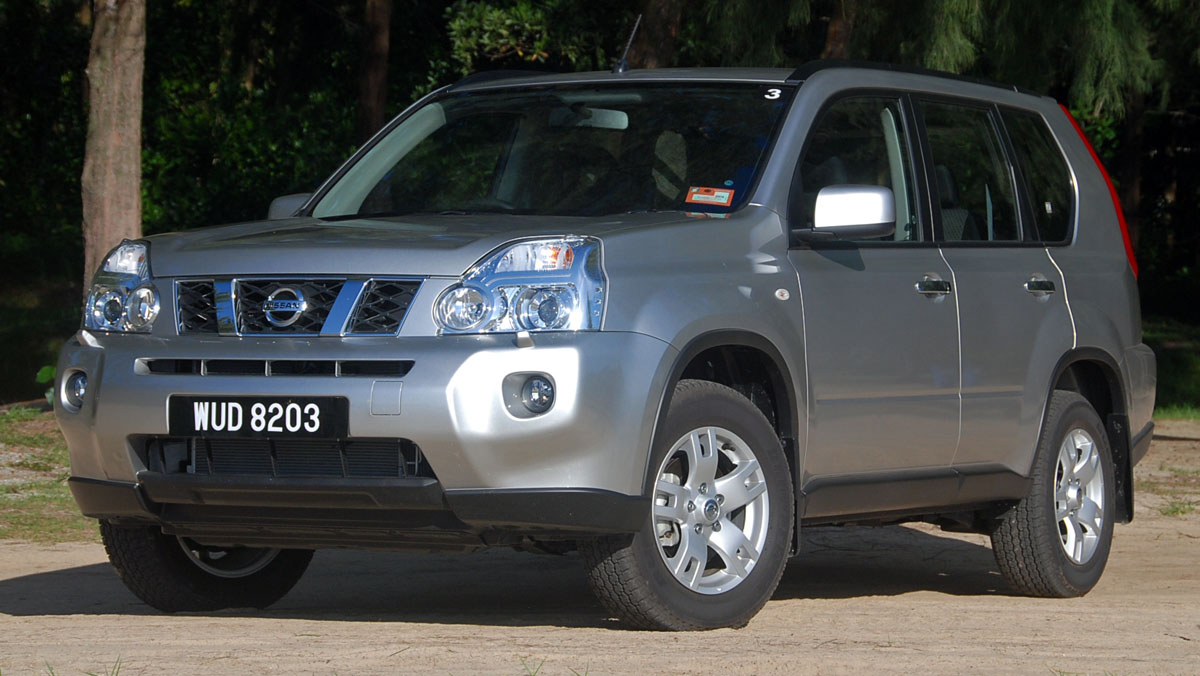
Click to enlarge
Edaran Tan Chong Motor (ETCM) has unveiled the new Nissan X-Trail to the media today. As previously speculated and captured on this blog, the X-Trail is imported CBU from Indonesia, which is the production hub of the SUV for our region. It is priced at RM149,500 OTR including insurance.
We only get one engine option – the MR20DE 2.0-litre engine that also powers the Sylphy. However, in the X-Trail this all-aluminium CVTC equipped engine makes 137 bhp and 198 Nm of torque, slightly more than the Sylphy’s 131 bhp/191 Nm. Like the C-segment sedan, the engine is mated to Nissan’s Xtronic CVT, but the stepless gearbox gets a manual shift mode here with six virtual ratios to play with. Power goes solely to the front wheels.
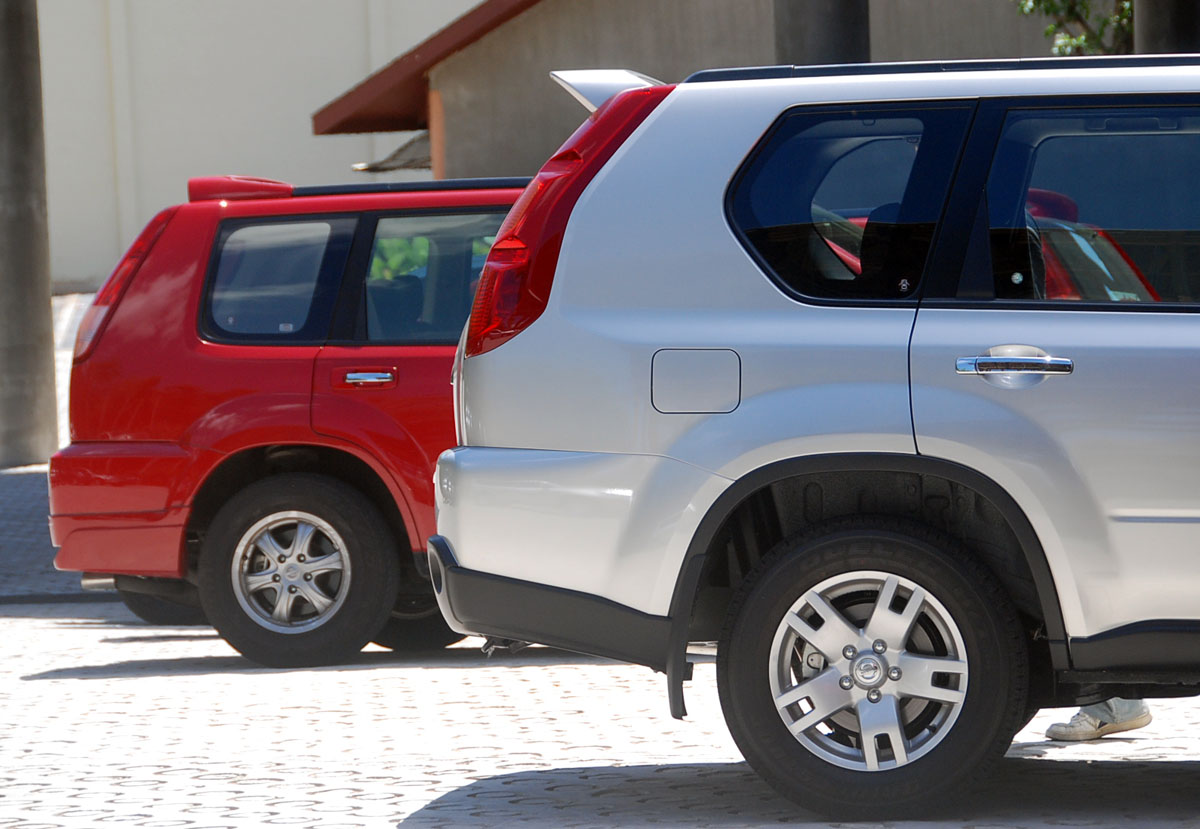
Click to enlarge
Size wise, the X-Trail is longer than the old model by 175 mm and slightly wider too, although wheelbase is only up by 5mm to make 2,630 mm. I believe that the picture above shows where all that extra length has gone too – the silver X-Trail is the new model, and the section aft of its rear doors is obviously longer.
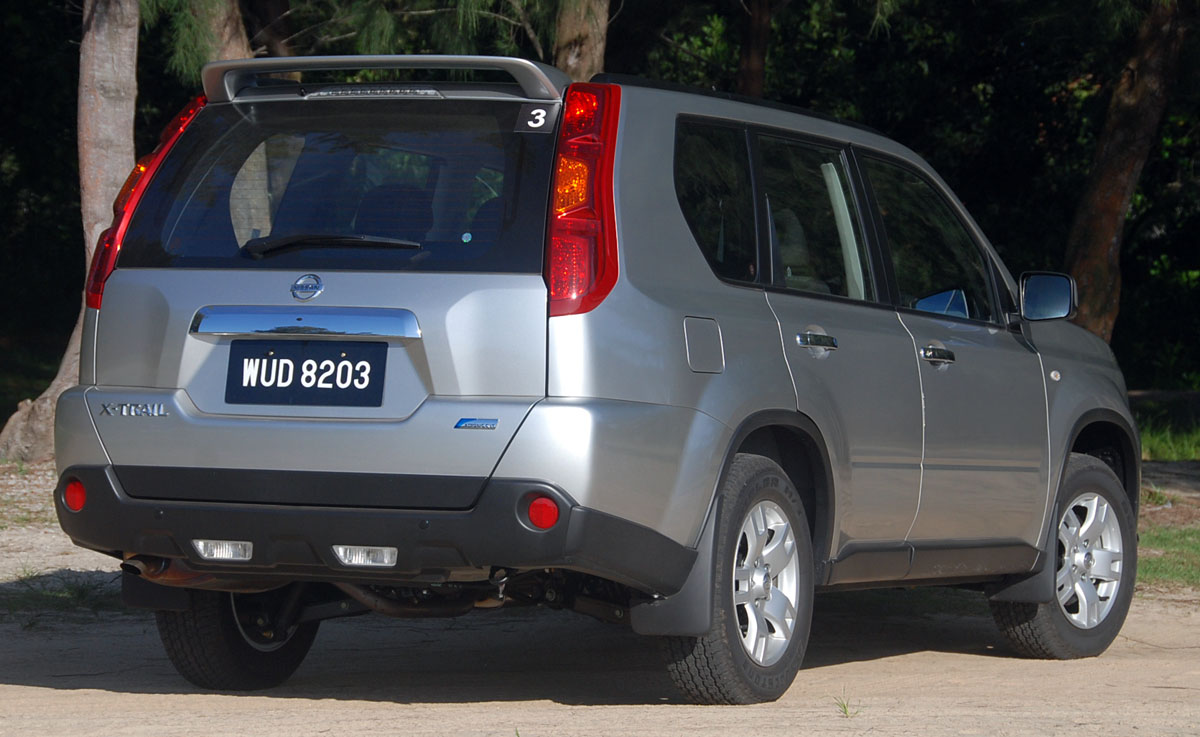
Click to enlarge
That makes for a huge boot. Despite carrying a full sized spare tyre inside the vehicle, the versatile cargo area has a square space of 603 litres. That’s in the single floor mode; in the double floor mode, the “false floor” covers 2 drawers, the right one with configurable compartments, the left one for long items like umbrellas. Like its predecessor, the luggage board is washable, perfect for the mountain bike! A tonneau cover is standard.
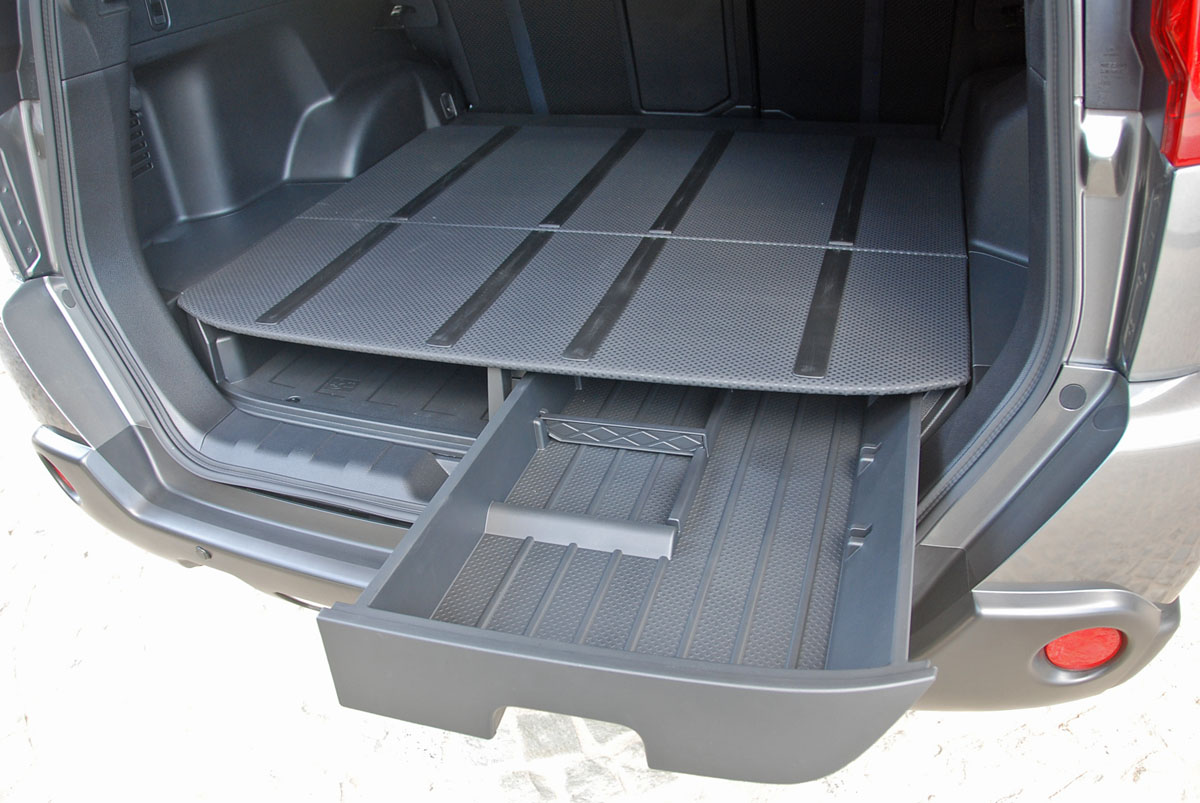
Click to enlarge
The interior ditches the central instruments for a more conventional layout. Fit and finish as well as material quality is good – the main dash moulding and all door caps feature soft touch plastics. Here, you’ll find a 2-DIN stereo with USB/AUX/Bluetooth and SD card capability sandwiched by two cubby holes.
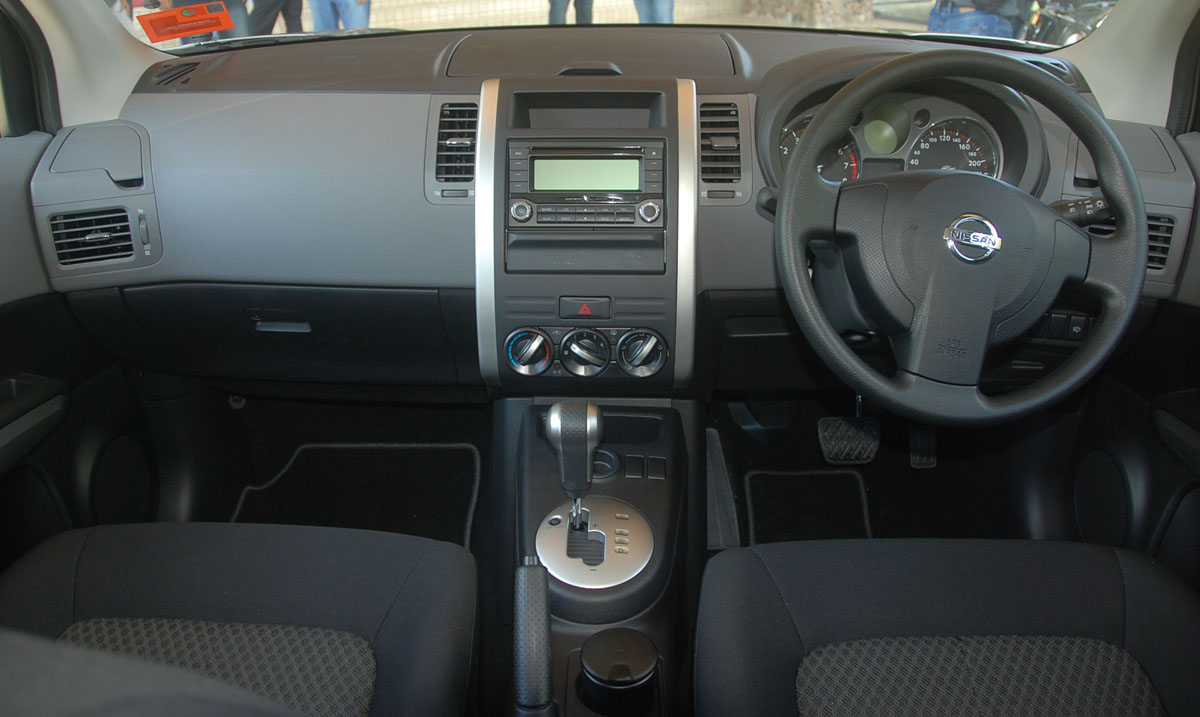
Click to enlarge
The air-con may be manual, and the steering has no buttons or leather wrap, but the X-Trail does come with features like rear air-con vents, powered front seats (6-way adjustable for driver, 4-way for passenger), keyless entry and start and bi-xenons with washer and auto levelling. Two cupholders up front and two behind have cooling functions. Safety kit includes 2 airbags, ABS, EBD, Brake Assist, pre-tensioner seatbelts and active head restraints. According to ETCM, this is the exact same spec that attained six stars in JNCAP crash tests.
On a separate note, ETCM has confirmed that the D-segment Teana, which has been spotted on our roads, will be launched at the “end of the year” in Malaysia. The Camry/Accord fighter will be locally assembled and priced competitively, unlike their previous CBU attempt at this model.
